

A landlord’s failure to deal with a known hazard can have serious consequences. If you’re wondering, “Can I sue my landlord for negligence?”, the answer is yes: in Ireland, a tenant may bring a claim if the landlord owed them a duty of care, breached it and caused injury or loss. According to the Irish Statute Book, a personal injury claim against a landlord must be brought within two years.
It’s understandable to expect a landlord to address reported disrepair, but not every repair issue amounts to negligence. The key questions are what the landlord knew, whether they had a reasonable opportunity to act, and whether their failure caused harm.
This article explains what may count as landlord negligence, how disrepair and evidence can affect a claim, and what compensation may cover. It also outlines when tenants may take legal action and what to consider if a landlord denies responsibility, helping you understand the issues before deciding how to proceed.
Key Takeaways
- Keep a clear record of reported hazards, including written communications, photographs and repair updates.
- Whether disrepair supports a claim can depend on the condition, the landlord’s knowledge of it and the time allowed to respond.
- Housing standards in Ireland cover issues such as dampness, while the nature and impact of a defect matter to an individual case.
- A compensation claim may consider both the effects of an injury and financial losses linked to the landlord’s failure to act.
- Understanding your evidence and the route to legal action can help you decide what to do if the landlord disputes responsibility.
What If the Landlord Denies Responsibility?
If a landlord disputes a repair request, a written record can show what they knew and when. Keep your evidence, allow a reasonable time for a response, and distinguish a repair dispute from a claim for injury or loss.
Recording Hazards and Repair Requests
Documenting a hazard means recording its condition, location and repair history. This helps establish what you reported and whether the landlord had an opportunity to act.
Take dated photographs or videos of issues such as a leak, damaged stairs or a broken lock. Write to the landlord or property manager with the address, affected area, problem and any safety concern. Keep copies of emails, texts or letters, replies and repair records. If the hazard changes, photograph it again and note the date. A guest’s account may also help describe what happened. These records can clarify disputed details without relying on memory alone.
Repair Duties and Reasonable Timescales
A landlord’s repair responsibilities include maintaining the structure and exterior of a rented home and addressing reported problems within a reasonable time. The appropriate response time depends on the hazard and its impact.
For example, a defect affecting safe access may require a faster response than a minor cosmetic issue. The landlord’s knowledge matters: report an unsafe condition clearly and keep evidence showing when notice was given. If repairs are not arranged, follow up by identifying the outstanding defect and referring to your original report. No single waiting period applies to every repair. The seriousness of the risk, the work required and the time already elapsed all help determine what is reasonable.
The Courts and Civil Law (Miscellaneous Provisions) Act 2023 commenced on 31 July 2023, according to the Irish Statute Book. Keep the legal issue focused on the landlord’s response to the specific hazard and the evidence of notice.
Reimbursement and Repair Orders
Reimbursement is money spent addressing a repair, but it is not automatic just because a tenant paid for work. Before arranging non-urgent work, write to the landlord, describe the defect and request a response. Keep the estimate, invoice, proof of payment and any messages explaining why the work was needed.
Urgent hazards require careful judgement. Record why you acted, what work was completed and how the cost relates to the defect. Do not assume the landlord must repay every expense: responsibility and supporting evidence matter. In a successful housing disrepair claim, a court may order the landlord to carry out necessary repairs. Such an order addresses ongoing disrepair, while reimbursement concerns past expenditure. These are distinct outcomes, so identify the remedy you seek and support it with records.
Reporting Unsafe Rental Housing
In Ireland, report a tenancy dispute to the Residential Tenancies Board (RTB) through its dispute resolution process. Report suspected rental-standard breaches to your local authority. Provide the relevant body with the property address, landlord details, hazard description and copies of your written reports and photographs.
The RTB route applies where the disagreement concerns landlord and tenant obligations. Contact your local authority about whether a rented home meets housing standards. State whether and when the landlord was notified, and what response followed. Keep a copy of your report and any acknowledgement. If the landlord denies responsibility, this record can help show what issue you raised, with whom, and what evidence you provided.
What Constitutes Landlord Negligence?
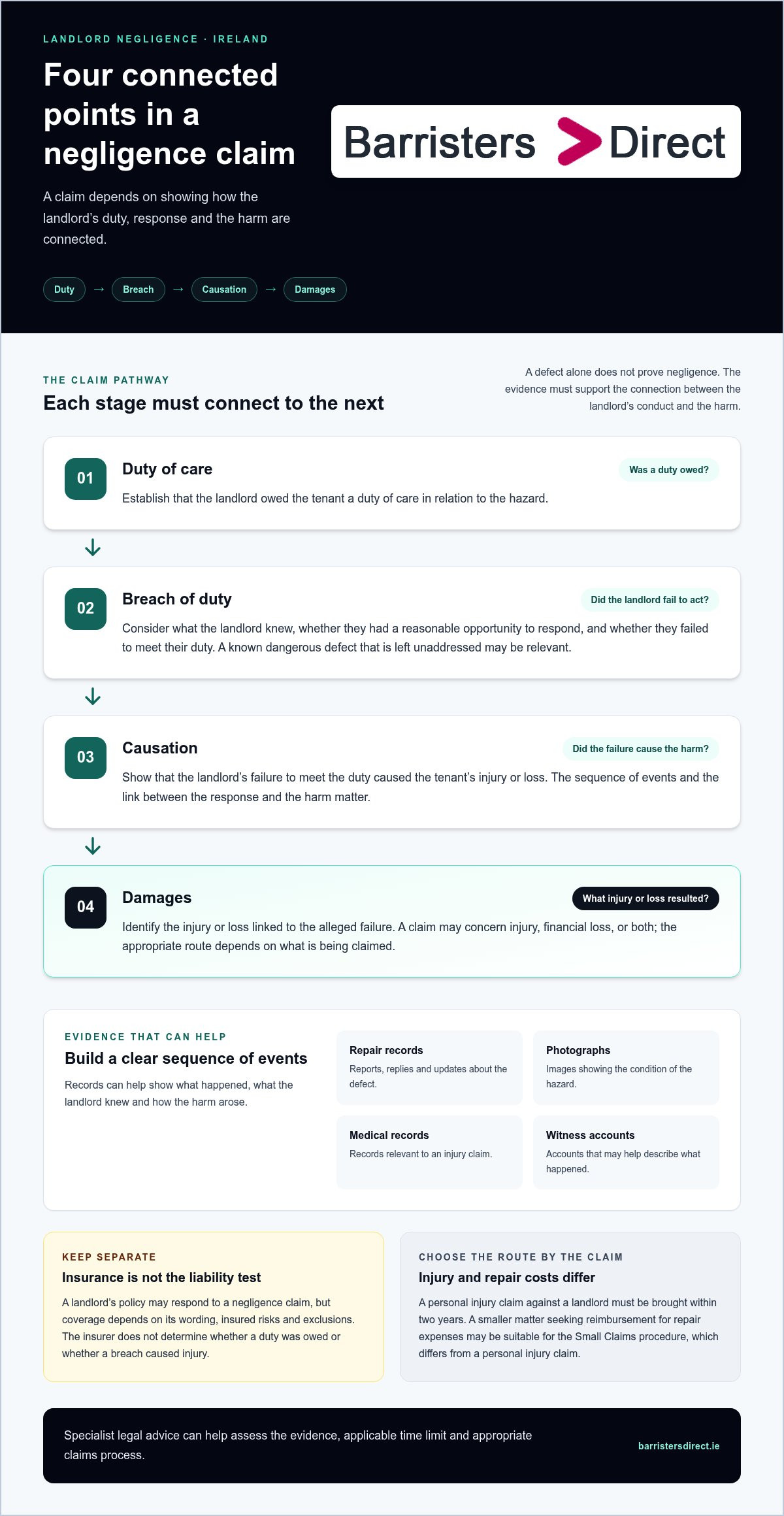
A negligence claim turns on four connected points: duty, breach, causation and damages. A tenant must show that the landlord owed a duty of care, failed to meet it, and thereby caused injury or loss.
For example, if a landlord knows about a dangerous defect and does not address it, the question is whether that failure caused the tenant’s injury. Repair records, photographs, medical records and witness accounts can help establish the sequence of events. A defect alone does not prove negligence; the connection between the landlord’s conduct and the harm matters.
Insurance is separate from liability. A landlord’s policy may respond to a negligence claim, but coverage depends on the policy wording, insured risks and exclusions. The insurer does not determine whether the landlord owed a duty or whether a breach caused injury. Those issues depend on the evidence and the legal test.
Bringing a claim does not automatically remove a tenant’s rights. However, a negligence claim does not determine whether a separate notice ending the tenancy is valid. If you receive a notice, keep it and seek prompt advice about its stated grounds and the process it follows.
For personal injury, timing matters. According to the Irish Statute Book, a claim against a landlord must be brought within two years. The Personal Injuries Resolution Board Act 2022 introduced stricter cost consequences for rejecting Injuries Resolution Board assessments. This makes it important to understand the assessment process and the possible consequences before deciding how to respond.
Not every landlord dispute is a personal injury claim. A smaller matter, such as seeking reimbursement for repair expenses, may be suitable for the Small Claims procedure. That route differs from a personal injury claim, which involves different evidence and procedures. Identify whether you seek repayment, injury compensation, or both before choosing a route.
Legal advice can help assess the evidence, applicable time limit and appropriate claims process. Keep the tenancy agreement, written repair requests, replies, invoices and any medical records together. A clear timeline can show what happened, when the landlord learned of the issue, and how the loss followed.
If you need advice on the legal issues raised by a landlord dispute, expert legal advice can help you understand the relevant evidence, procedures and next steps.
What counts as housing disrepair?
Housing disrepair means a defect or unsafe condition affects the rented home or its facilities. Its significance depends on the condition, its effects and the landlord’s responsibility for it.
Housing Standards, Damp and Mould
Irish rental standards address conditions that affect a home’s safety and habitability. According to the Irish Statute Book, the Housing (Standards for Rented Houses) Regulations 2019 require rented properties to be free from dampness.
Damp patches, recurring mould and water ingress can signal a problem that needs attention. Record where the damp appears, when it returns and whether it follows a leak or ventilation issue. These details can help distinguish a persistent building defect from a temporary surface mark. The circumstances and cause matter when assessing responsibility.
Examples of Housing Disrepair
Disrepair can involve damage to a home’s structure, failed facilities or defects that stop essential parts from working properly. Examples include a leaking roof, broken windows, damaged flooring, a persistent plumbing leak or a faulty heating system.
Irish rented-housing standards also cover sanitation facilities, including toilets, basins, sinks and baths. A broken toilet or unusable sink is therefore different from a minor cosmetic flaw. Note which facility is affected, how long it has been unusable and whether the defect caused further damage, such as water affecting a wall or floor.
Common Housing Hazards
A housing hazard creates a risk to occupants, rather than simply making a home look untidy. Examples include unsafe wiring, a loose stair tread, a broken lock or a leak that leaves a floor slippery.
Water, gas and electricity systems should be safe and functional. If a socket sparks, a gas appliance appears unsafe or a stair becomes unstable, describe the specific danger in writing. Record the room, the defect and its effect on daily use. The hazard’s seriousness and the landlord’s responsibility for the affected area can influence how the issue is assessed.
Housing discrimination is separate from physical disrepair, although both can affect a tenant’s experience. For example, a landlord might respond differently to repair requests after learning about a tenant’s personal circumstances. Keep dated messages and record what was said, by whom and when. Separate evidence of disrepair from evidence of unequal treatment, then explain how each issue affected you. This makes the concern clearer without treating every repair disagreement as discrimination.
Compensation for injury, inconvenience and losses
Compensation may be available if a landlord’s negligence causes injury or financial loss. A tenant may claim for injury or property damage where evidence connects the loss to the landlord’s failure.
Compensation for Tenant Injuries
Compensation for a tenant’s injury addresses harm caused by a landlord’s negligent failure to deal with a hazard. The nature of the injury and its effects help explain the claim.
For example, a tenant who falls on a damaged stair may need medical records describing the injury and treatment. A report made soon after the incident can record where and how it happened. Keep appointment records, prescriptions and evidence of time away from work. These materials help show the injury’s impact and connect the hazard to the harm.
Claims may include general damages for pain, suffering and loss of amenity. The injury’s seriousness, recovery and effect on ordinary activities are relevant. Medical records can document symptoms, while a personal account can explain practical effects, such as difficulty walking or sleeping.
Financial Loss and Property Damage
Financial loss means an expense or lost income linked to the negligence. Itemised records help distinguish incident-related losses from ordinary household costs.
For example, keep receipts for travel to medical appointments, treatment expenses and any replacement item damaged by a leak. If an injury affects your work, retain payslips or employer records showing missed hours or reduced earnings. A repair invoice or replacement receipt can support a property-damage claim, while photographs can show the item’s condition. Evidence should identify the loss, its value and how it arose.
These losses are commonly described as special damages. A clear schedule can list each expense, its date and supporting document. Avoid combining unrelated costs: a receipt for an everyday purchase does not show that the landlord caused a loss. The clearer the link between the hazard and the expense, the clearer the claim.
Compensation for Inconvenience
Compensation for inconvenience concerns disruption or loss of use caused by disrepair. It may matter when a defect affects ordinary activities, even without physical injury.
A tenant might be unable to use a bathroom during repairs or have to move belongings away from a leaking ceiling. Record which rooms or facilities were affected, how long the disruption lasted, and any practical changes to daily life. Emails about repair access, photographs and household notes can support your account.
In a successful disrepair claim, compensation may reflect inconvenience and loss of amenity alongside pain, suffering or financial losses. Keep each category distinct. An injury report supports physical harm, invoices support expenses, and dated notes can explain disruption. Together, these records give a clearer account of the remedy sought and the consequences of the landlord’s negligence.
When tenants may take legal action
Legal action becomes a practical consideration when informal efforts have not resolved the dispute, or when harm already requires a formal remedy. If you’re asking whether you can sue your landlord for negligence, first focus on the specific legal issue and outcome you want to pursue.
Define the dispute narrowly. A complaint about a landlord’s conduct is not necessarily a claim that the conduct caused a particular injury or loss. For example, a tenant may want an ongoing problem addressed while also considering a separate claim arising from an earlier incident. Keeping these objectives distinct helps prevent one from obscuring the other.
Next, identify what remains disputed. The landlord might accept that a defect existed but deny responsibility for it, or accept responsibility for repairs while disputing that the defect caused harm. These positions raise different questions. Set out the disagreement clearly so legal advice can focus on the point that could affect the outcome, rather than revisiting matters both sides accept.
Consider whether the proposed action matches the result you seek. A demand for compensation should explain the alleged wrongdoing and the loss attributed to it. A request about an unresolved condition has a different purpose. If both issues matter, explain how they relate without assuming that resolving one will automatically resolve the other.
Before choosing a course of action, discuss the strengths and weaknesses of your position with a legal professional. Be candid about facts that may complicate it, such as uncertainty over who controlled the relevant area or a delay between the incident and its discovery. A balanced assessment can help you understand the available routes and make a considered decision.
Legal action is a decision about how to resolve a defined dispute, not simply a response to frustration. A clear account of the issue, the landlord’s position and the remedy sought gives an adviser a stronger basis for assessing the next step.
Barristers Direct: Commercial Dispute Resolution
Barristers Direct offers Commercial Dispute Resolution advice for businesses facing disputes connected with commercial property or landlord arrangements. For a residential tenancy, this commercial offering may not be the relevant route; the legal questions and remedies depend on the nature of the dispute.
For a business-related dispute, Barristers Direct enables individuals and companies in Ireland to instruct specialist senior or junior counsel directly for an initial consultation. A barrister can assess the documents, explain the legal issues and outline practical options, helping you understand a clear path forward. This advice can help you decide what steps to take before a dispute escalates or after positions have hardened.
If your landlord dispute arises from a business arrangement, contact Barristers Direct to discuss the legal advice you need.
Choose your next step with confidence
If you’re still considering whether you can sue your landlord for negligence, decide what you need next: a repair, compensation, or advice about your position. The right next step depends on the facts, the outcome you seek and the evidence available.
Legal advice can help you assess these factors and understand your options before acting. Barristers Direct offers advice across several areas, including Commercial Dispute Resolution, Wills and Probate Legal Advice, and Employment Law Consultation. For a landlord or tenant issue, focus your enquiry on the tenancy facts, the landlord’s response and the outcome you want to pursue.
Set out the issue clearly and keep relevant documents together. A focused discussion can clarify which legal questions matter and what decisions lie ahead.
Contact Barristers Direct to discuss your legal advice needs. A clear next step can help you move forward with greater confidence.
Frequently Asked Questions
Are There Options Other Than Suing?
Yes. You can seek a repair directly, raise a tenancy dispute with the Residential Tenancies Board (RTB), or report suspected rental-standard problems to your local authority. These routes address different issues: the RTB deals with tenancy disputes, while a local authority can consider housing-standard concerns. If resolving disrepair is your priority, explain the outcome you want and keep a written record of any agreement or response.
Can I Sue My Apartment Complex for Negligence?
Possibly, but responsibility depends on who controlled the area where the hazard occurred and who had a duty to address it. In Irish apartment blocks with five or more residential units, the Owners’ Management Company typically controls common areas. An injury in a shared stairwell may therefore raise different questions from an incident inside a privately rented flat. Identify the location, responsible party and any prior reports before considering a claim.
Can I Sue My Landlord for Not Fixing My Home?
You may have options if a landlord was notified about a defect, failed to address it within a reasonable time, and that failure caused harm or loss. A repair dispute alone is not automatically a negligence claim. For example, an unresolved leak might support a request for repairs, while damage to belongings or an injury raises separate questions about causation and evidence. The remedy you seek should match the effect of the defect.
What Evidence Is Required?
Evidence should help establish the defect, the landlord’s knowledge, their response and any resulting harm. A tenancy agreement can clarify responsibilities, dated images can show the condition, and correspondence can establish when notice was given. For an injury, medical records and witness statements may help explain what happened. If the cause or seriousness is disputed, an expert report may assist. Keep original documents and organise them by date.
What Can You Claim?
A successful claim may include general damages for pain, suffering or loss of amenity, and special damages for financial losses. Records of missed earnings, medical expenses or damaged belongings can help explain particular losses. Keep receipts and evidence showing how each expense relates to the incident. The type of harm, its impact and the supporting documentation shape what can be claimed; the amount depends on the evidence and circumstances.
When Should You Seek Legal Advice?
Seek advice promptly if an injury has occurred, the landlord disputes responsibility, or you are unsure which route fits your problem. Early advice can help you distinguish a repair request from a personal injury or compensation claim and identify relevant evidence. According to the Irish Statute Book, a personal injury claim against a landlord must be brought within two years. Getting advice early helps you understand the time limit and avoid delay.
What Evidence Should I Gather for a Landlord Negligence Claim?
Start with a dated timeline: when you first noticed the issue, when you reported it and what happened next. Gather the tenancy agreement, relevant messages, repair records, photographs or videos, and witness names. If someone was injured, include medical records and details of appointments or treatment. For financial losses, keep receipts and income records. Label files by date and keep copies so each item can be linked to a specific event or loss.
How Do I Start a Landlord Negligence Claim Through the Injuries Resolution Board or Courts?
First establish whether the matter involves personal injury, property damage, or both, and organise evidence for each. For an injury claim, get advice on whether the Injuries Resolution Board process applies and what information your case needs. The Personal Injuries Resolution Board Act 2022 introduced stricter cost consequences for rejecting Board assessments, so understand those implications before responding. Court proceedings involve a separate legal process; advice can clarify the appropriate route and required documents.
Disclaimer
This article does not constitute legal advice. Barristers Direct does not provide legal advice. To obtain legal advice, you should contact a legal practitioner.


