

A second opinion can help you understand your options if you’re uncertain about advice you’ve received or how to approach an employment or equality issue in Ireland. Seeking lawyer advice doesn’t, by itself, mean you must change your existing legal representation. The next step depends on what you need clarified and the arrangements already in place. Lawyer advice can also help you identify questions to discuss with your current representative.
It’s understandable to want confidence before making a decision that could affect your work, rights or next steps. A focused second opinion can help you test your understanding, identify questions to raise with your current representative and assess whether employment or equality law is relevant to your circumstances.
This article explains when another legal perspective may be useful, what to consider if a solicitor already acts for you, and how to prepare to discuss a workplace concern. It also explains where specialist employment law advice fits, helping you approach the issue with a clearer sense of direction.
Key Takeaways
- A second opinion can help clarify your options without automatically requiring you to change your existing legal representation.
- Understanding whether an employment or equality issue is involved can help you focus your next steps.
- Bring relevant documents and a clear timeline of events to make your first legal meeting more productive.
- Ask about the lawyer’s relevant experience, the advice they can provide and how the work will proceed.
- Phone-based information may help you understand where to turn, while legal advice can address your specific circumstances.
Second opinions and existing legal representation
A second opinion can help you assess advice, identify unanswered questions or understand possible next steps. For example, you might ask another qualified legal professional to review a proposed settlement or explain a court procedure. Be clear about the specific issue you want examined, rather than seeking a general review of every aspect of your case.
If a solicitor already represents you, start by reviewing your engagement terms and the work underway. Ask your solicitor to explain anything unclear. If you still want another perspective, prepare a concise summary and relevant correspondence for the new adviser. Explain who currently acts for you and whether any deadlines or hearings are approaching. A second opinion need not mean ending the existing relationship. Consider any change only after understanding the practical implications.
In Ireland, the Law Society of Ireland provides public guides and a directory of practising solicitors. These resources can help you understand legal services and find a solicitor whose practice relates to your issue. When seeking a referral, describe the matter plainly, such as a tenancy dispute or an employment decision. Your location, the issue and your preferences can help shape your search for advice.
If you have been charged with a criminal offence, eligibility for free legal aid may depend on your financial circumstances and the type of offence alleged. The Legal Aid Board may provide legal advice and representation. Its website can help you find your nearest law centre. Contacting a law centre is a practical step if you need to understand whether legal aid may apply to your situation.
People can represent themselves in court in Ireland, but legal advice can help explain the law and court procedures. A solicitor can discuss your circumstances and options, explain the court process, manage a civil case and attend a hearing with you. A qualified legal representative may also prepare and submit paperwork, communicate with others involved, and speak on your behalf in court. The Courts Service of Ireland cannot advise you or represent you in court.
Before choosing your next step, write down what you need answered: the legal issue, available options, required documents and any upcoming court event. If you are already represented, ask how a second opinion could fit alongside the work in progress. This keeps the discussion focused and helps you compare the advice with your current understanding.
A further perspective may be useful when a question turns on legislation or a particular area of practice. Kieron Wood is a qualified barrister and former legal affairs editor of RTÉ, and an expert on Irish legislation. Karl Dowling is a practising barrister specialising in wills, succession law and probate litigation, and edits the Irish Probate Journal. Free legal aid is intended to ensure that everyone accused of a crime can access legal advice, regardless of their circumstances and means. When comparing views, keep your question specific and ensure the adviser’s expertise fits the issue, while continuing to clarify arrangements with your current solicitor.
Employment and equality law
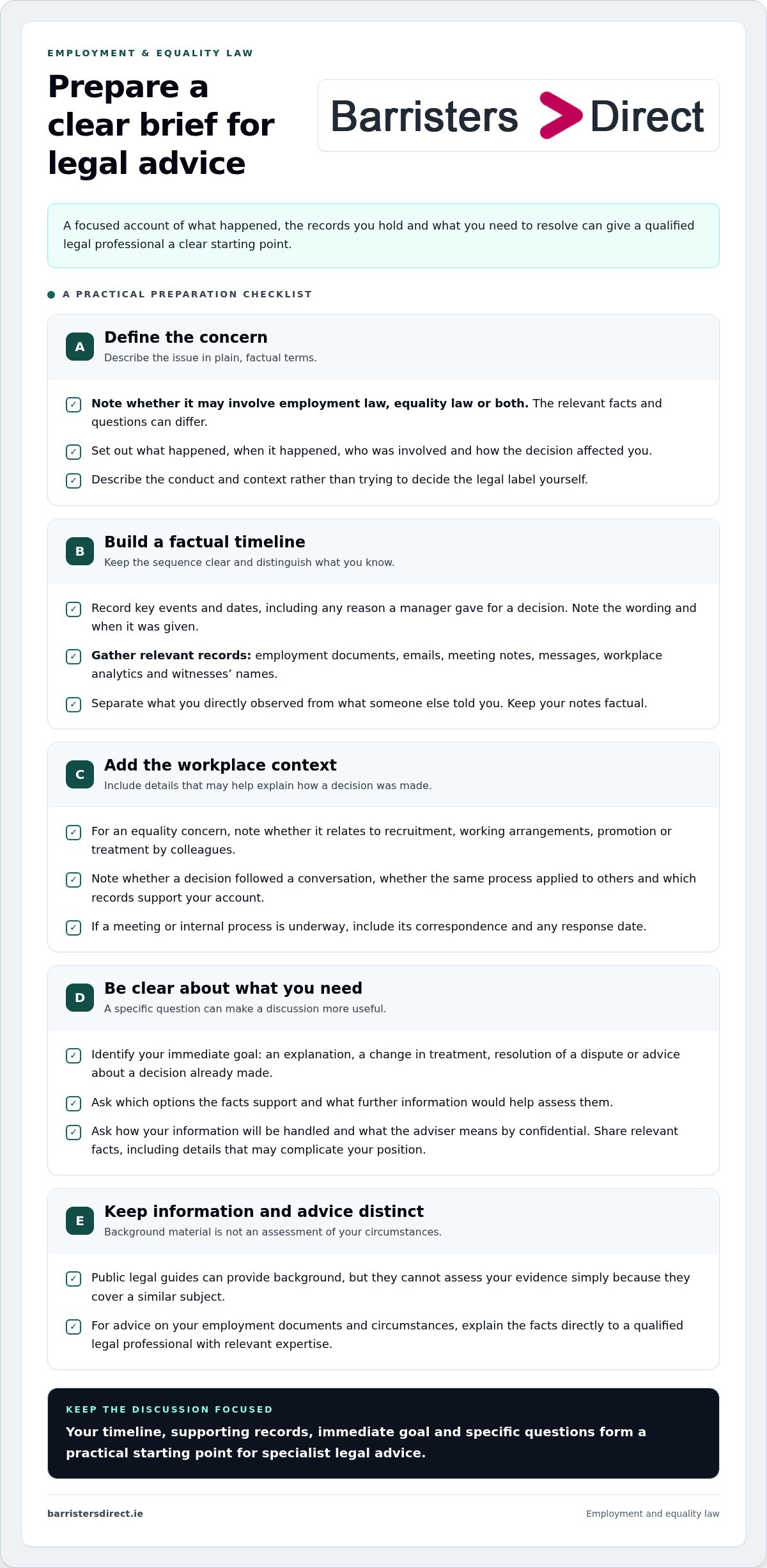
A workplace concern may involve employment law, equality law or both. The distinction matters because the relevant facts and questions differ. For example, a disagreement about pay or dismissal raises different issues from unfair treatment connected with a personal characteristic. Write down what happened, when it happened, who was involved and how the decision affected you. This gives a legal adviser a clear starting point.
Build a factual timeline before discussing the issue. Include employment documents, emails, meeting notes, messages, relevant workplace analytics and witnesses’ names. If a manager gave a reason for a decision, record the wording and date. Keep your notes factual, separating what you directly observed from what someone else told you. This helps an adviser assess the available evidence without relying on assumptions or a workplace summary you may not accept.
Equality concerns can arise in different workplace situations, including recruitment, working arrangements, promotion or treatment by colleagues. Describe the conduct and its context rather than trying to decide the legal label yourself. For instance, note whether a decision followed a conversation, whether the same process applied to others, and which records support your account. These details help distinguish a general workplace disagreement from a concern that may need specific equality-law analysis.
Before taking a formal step, identify your immediate goal. You might want an explanation, a change in treatment, a resolution to a dispute or advice about a decision already made. Ask which options the facts support and what information would help assess each one. If a meeting or internal process is underway, include its correspondence and any response date in your summary. A focused question can make legal advice more useful.
The Law Society of Ireland provides public guides to help readers understand legal services and common legal topics. Use general guides for background, then distinguish that information from advice on your employment documents and circumstances. A free legal information page cannot assess your evidence just because it covers a similar subject. If you need individual advice, explain the facts directly to a qualified legal professional.
At an initial discussion, ask how your information will be handled and what the adviser means by confidential. Share relevant facts, including details that may complicate your position. If you’re considering specialist input on a workplace dispute, discussing your legal options with a professional can help you identify the questions that matter before deciding how to proceed.
What should I bring to my first meeting with a lawyer in Ireland?
Bring documents that help explain the issue, its timeline and what you want resolved. People attending an appointment at Ballymun Community Law Centre are advised to bring any supporting documentation they have. The same practical approach can help elsewhere: organise relevant papers before the meeting rather than relying on memory alone.
Start with a short written summary. Include the people involved, key events and dates, and the decision or outcome you want advice about. For example, if a disagreement followed a written notice, note when it arrived and keep the notice. Separate what you know directly from what someone else told you.
Gather materials relevant to your particular matter. Depending on the issue, these might include:
- Letters, emails or messages between you and the other people involved.
- Agreements, notices, invoices or other documents central to the dispute.
- Relevant meeting notes, records or decisions you have received.
- A list of names and contact details for people connected to the events.
- Earlier legal correspondence, if another solicitor or adviser has been involved.
Choose relevant records, not every document you own. If a message refers to an attachment, bring that too. Keep original files intact where possible, and make copies or create a clear digital folder for the meeting. Label documents by date or subject so you can find them quickly.
For an ongoing matter, note upcoming appointments, meetings or response dates mentioned in correspondence. Bring the document that specifies each date rather than relying on an estimate. If you have already received legal advice, include the advice or correspondence and mark the points you still need explained. This helps focus the new discussion on what remains unresolved.
Prepare questions before you arrive. You might ask what the documents suggest, what further information would clarify your position, and what options could follow. Write down the answers and next steps during the meeting. If you don’t understand a legal term, ask for a plain-language explanation.
Some information may be sensitive. Keep it with the relevant papers and tell the lawyer if a document raises a particular concern. A concise, organised set of records makes it easier to discuss the facts, identify gaps and use the meeting effectively.
You can also use the meeting to explain your circumstances and ask about available support. In Ireland, a solicitor can discuss your circumstances and support services, manage your civil case, and represent you in court. A qualified legal representative may outline options for reaching an agreement, including mediation. If you are unsure where to seek legal help, use the Legal Aid Board website to find your nearest law centre.
If your meeting concerns making a will, the Law Society of Ireland has partnered with RIP.ie to help people plan ahead and make one. You may wish to include this subject among the matters you want to discuss, alongside documents and questions relevant to your circumstances. For other legal issues, a clear account of what happened can help you explain the assistance you’re seeking and consider the options a legal representative outlines.
What questions should I ask before hiring a lawyer in Ireland?
Use your first discussion to establish whether the lawyer understands the issue and what work you need. Briefly explain your situation, then ask how their experience relates to it. A workplace dispute, unpaid invoice and tenancy disagreement, for example, each involve different facts. A clear response should identify the questions that need examination rather than promise a particular result.
Ask who will advise you and what their role will be. If a solicitor is involved, clarify whether they will handle correspondence, prepare documents or discuss court options. If you are considering a barrister, ask what advice they can provide on your matter. The Law Society of Ireland’s directory can help you find practising solicitors; use it alongside a discussion about the specific expertise your issue requires.
Questions to raise include:
- What experience do you have with matters like mine?
- What information or documents do you need to assess the issue?
- What options could the facts support, and what are their practical differences?
- Who will be my main contact, and how will updates be provided?
- What work is included in the proposed service, and what falls outside it?
Ask the lawyer to explain the next steps in plain language. If a decision or court event is approaching, mention it and ask what preparation may be needed. Find out whether you should gather more records or provide a written timeline. Clear responsibilities help you understand what the lawyer will do and what information you need to supply.
Discuss costs before deciding how to proceed. The price depends on the case and is provided after a quote request; relevant factors include the work involved, the issue’s complexity and the documents to be reviewed. Ask how charges are explained, what work they cover and how any further work will be discussed. Compare figures only when the proposed scope is comparable.
Confidentiality and communication also matter. Ask how your information will be handled, where to send documents and how to raise a concern. If you already have a solicitor, explain that at the outset and ask how the proposed advice relates to work already underway. This helps avoid duplicated steps and gives the new adviser relevant context.
Before agreeing to proceed, summarise your understanding: the issue being addressed, the immediate work, who is responsible and how you will receive updates. Ask the lawyer to correct anything you have misunderstood. A written record of these points can make the working arrangement clearer from the start.
Phone advice
A phone conversation can help you explain an issue, clarify what you need to know and identify useful next steps. Before calling a solicitor or legal adviser, write a short summary of the problem and the outcome you want. For example, note whether you need an explanation of a letter, guidance on a workplace decision or help understanding a court process. Organising the facts makes it easier to use the conversation well.
Keep relevant details nearby, even if you cannot share documents during the call. Note the names of people involved, key dates and any upcoming meeting or response date mentioned in correspondence. If you already have a solicitor, explain their role and the advice you’ve received. Then ask focused questions, such as what options may be available and which records could clarify your position.
For general information, the Citizens Information Phone Service can be contacted on 0818 07 4000, Monday to Friday, 9am to 8pm. This service can help callers find information about their circumstances. It is distinct from legal advice on the merits of an individual case, which requires consideration of that person’s specific facts.
If you need legal advice after a Garda interview request, Gardaí can search by division for a solicitor available to advise at a local Garda station and attend interviews. When seeking help, explain the situation clearly, including the station and any interview arrangements you’ve been given. A qualified legal representative can advise you about your rights and explain relevant procedures.
For a civil dispute, ask a legal representative to outline possible ways to reach agreement. These may include mediation, a private and confidential process in which an independent third party helps the parties seek a mutually acceptable settlement. A phone discussion can help you understand whether this option is worth exploring, what information is relevant and which questions remain unanswered.
Phone advice is most useful when you know what decision or concern you want to discuss. Keep a record of the guidance, any documents requested and the next steps agreed during the call. If the issue needs a detailed review of evidence or correspondence, ask what information the adviser needs to assess it properly. For individual legal guidance, arrange a discussion about your legal matter.
Barristers Direct: Commercial Dispute Resolution
Barristers Direct offers Commercial Dispute Resolution for individuals and businesses facing a commercial conflict. If you need a specialist perspective on a disagreement, you can arrange an initial consultation with senior or junior counsel directly, without first instructing a solicitor. Counsel can assess the issues and explain practical options.
The right next step depends on the issue you need resolved. A dispute between businesses may call for Commercial Dispute Resolution; a workplace concern may suit an Employment Law Consultation. A clear summary of the dispute, key correspondence and the outcome you want can help focus the discussion on the advice you need.
For a commercial matter, consider seeking specialist advice when negotiations have stalled, a claim has been raised or you need to understand your position before responding. Visit Barristers Direct to arrange an initial consultation about your legal matter.
Choose a clear next step
The next useful step is to define the decision you need help with. Identify what remains uncertain, what outcome matters to you and what you need clarified before acting. If you already have legal representation, explain how a further opinion should fit alongside the work underway. Legal advice is most useful when it addresses your circumstances and the decision in front of you.
Barristers Direct can connect you with counsel for an Employment Law Consultation, Wills and Probate Legal Advice, or Commercial Dispute Resolution. Each addresses a different legal need, so focus your enquiry on the issue you want examined and the guidance you’re seeking.
If a specialist legal perspective would help you decide what to do next, contact Barristers Direct for advice. Prepare a short account of the matter and the questions you want answered. A considered conversation can help you move forward with greater clarity and confidence.
Frequently Asked Questions
What does a lawyer do and when should I seek legal advice in Ireland?
A lawyer explains how the law applies to your situation and what options you can consider. Seek lawyer advice in Ireland if a contract, workplace decision or legal letter leaves you unsure how to respond. A lawyer can clarify the risks of acting or waiting and help you prepare a focused response. For example, ask for guidance before agreeing to terms you don’t understand.
What are the risks of getting legal advice online instead of from an Irish lawyer?
General legal information online may not assess your evidence or specific circumstances. For advice about your situation, explain the facts directly to a qualified legal professional.
Disclaimer
This article does not constitute legal advice. Barristers Direct does not provide legal advice. To obtain legal advice, you should contact a legal practitioner.


