

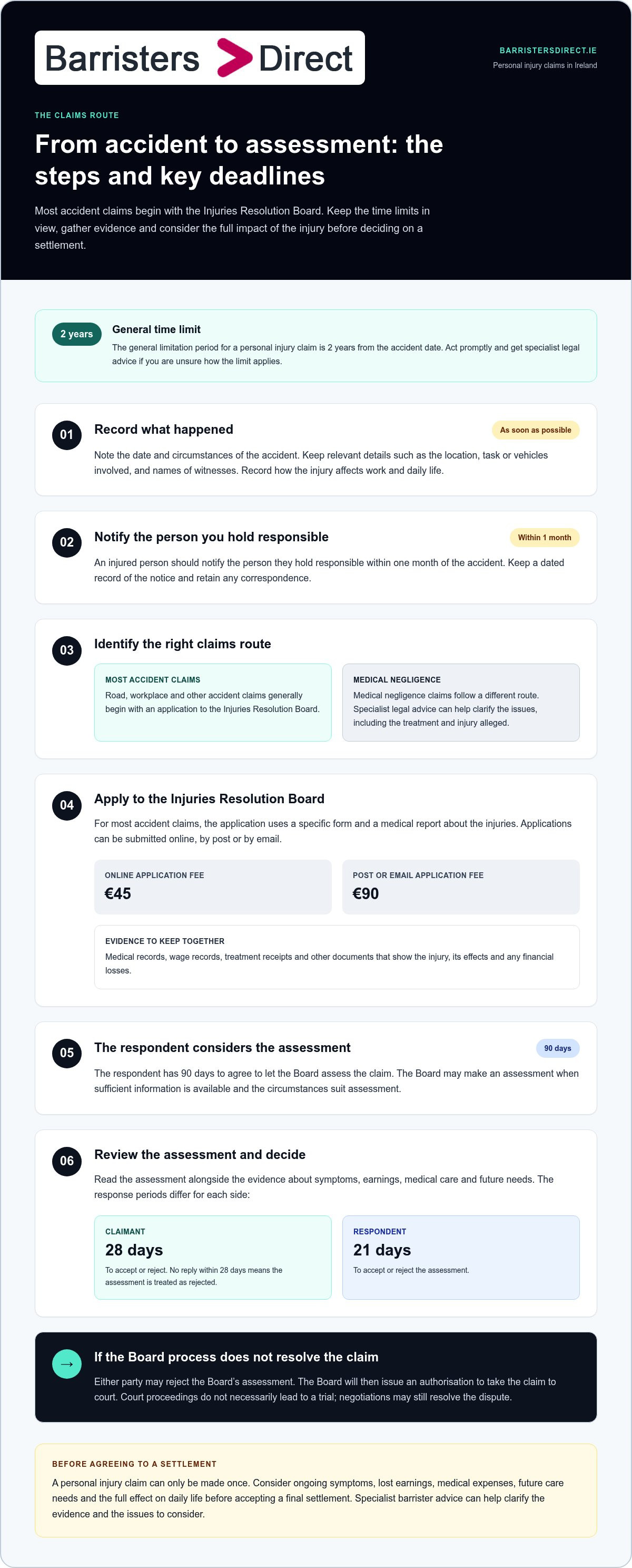
Act promptly: if you need personal injury legal advice in Ireland, the general time limit is 2 years from the accident date, according to the Irish Statute Book. Most personal injury claims, apart from medical negligence claims, begin with an application to the Injuries Resolution Board. Compensation may cover pain and suffering, medical expenses, lost earnings and future care needs.
It’s understandable to want clear answers before deciding what to do. A personal injury claim involves more than identifying an injury: liability, medical evidence and the effects on your work and daily life all matter. The right legal advice can help you understand the process and assess your options.
This guide explains when to consider a claim, what compensation may cover and what can affect the outcome. It also outlines how to assess a solicitor, how legal fees work in Ireland and what to expect from an initial consultation, so you can take your next step with greater clarity.
Key Takeaways
- Note the general 2-year limit from the accident date and act promptly to protect your options.
- Assess compensation by considering not only the injury, but also its effect on earnings, treatment needs and daily life.
- Understand the fee arrangement and what the legal work covers before deciding how to proceed.
- Gather medical records and other evidence that explain the injury, its cause and its impact.
- Use an initial consultation to clarify the claims process, the advice you need and the practical next steps.
When Do I Need to Claim for Personal Injury Compensation?
In Ireland, the limitation period for a personal injury compensation claim is 2 years from the accident date, according to the Irish Statute Book. Identify the accident type early, because the claims route differs for medical negligence and other injuries.
Workplace and Road Accident Claims
Workplace accident claims may arise when you’re injured while carrying out your work. Record the date, location, task and names of witnesses. Keep details of missed work and how the injury affects your duties. For example, a back injury may affect lifting, attendance or your ability to return to usual tasks.
A road traffic accident claim may involve a driver, passenger, cyclist or pedestrian. Note the vehicles involved, the scene and any witness details available to you. These details help explain how the collision happened and who may be responsible. Road traffic, workplace and public liability claims are different types of personal injury claims, so the cause and evidence matter.
Medical negligence claims follow a different route from most injury claims. Claims arising from accidents, including workplace and road traffic accidents, generally go to the Injuries Resolution Board, except medical negligence claims. If treatment caused harm, medical negligence legal advice can help clarify the distinct issues, including the treatment received and the injury alleged.
Act promptly after an accident. In Ireland, an injured person should notify the person they hold responsible within one month of the accident. Keep a dated record of the notice and retain any correspondence. A personal injury claim can only be made once, so consider the full effects of the injury before agreeing to a settlement.
Fatal injuries require a separate, sensitive approach. A fatal injury claim in Ireland may be pursued under the Civil Liability Act 1961, according to the Irish Statute Book. The circumstances of the death and the people affected are central considerations. Specialist advice can help clarify the legal route and the information needed to assess a claim.
The Injuries Resolution Board Process
For most accident claims, an application to the Injuries Resolution Board uses a specific form and a medical report about the injuries. The respondent has 90 days to agree to let the Board assess the claim. The Board may assess it when sufficient information is available and the circumstances suit assessment.
If the Board process doesn’t resolve your claim, either party may reject its assessment, and the Board will issue an authorisation to take the claim to court. Neither side has to accept the recommended settlement figure. Court proceedings don’t necessarily lead to a trial, as negotiations may still resolve the dispute.
Compensation for earnings loss, medical care and injury effects
Compensation can address the injury itself and its financial consequences, including treatment costs and lost earnings. Before accepting a settlement, consider whether the assessment reflects continuing symptoms, future care and the full effect on daily life.
Applying for Injury Compensation
An application to the Injuries Resolution Board can be submitted online, by post or by email. The application fee is €45 online, or €90 by post or email. Include the required details and supporting medical evidence so the injury and its effects can be assessed. Keep wage records, treatment receipts and other documents that explain financial losses.
Injury awards reflect the type and severity of harm. The Personal Injury Guidelines list €10,000 to €30,000 for minor injuries such as sprains, and €30,000 to €75,000 for moderate injuries such as fractures or concussions. Serious injuries such as spinal cord injuries or amputations are listed at €100,000 to €500,000, while catastrophic injuries are listed at €500,000 or more.
These figures relate to the injury assessment, not a complete calculation of every financial loss. The Board’s Book of Quantum is a reference point. Medical evidence, effects on work and daily living, and documented expenses also matter. For example, retain payslips showing reduced income and invoices for treatment or equipment.
Assessment and Settlement Decisions
Once the Injuries Resolution Board issues an assessment, a claimant has 28 days to accept or reject it. The respondent has 21 days. If the claimant doesn’t reply within 28 days, the assessment is treated as rejected. Read the assessment alongside the evidence about symptoms, earnings, medical care and future needs before deciding.
The main risk in accepting a settlement is overlooking losses or effects the assessment doesn’t account for. Check whether treatment is ongoing, symptoms affect work or care needs have changed. A personal injury claim can only be made once, so consider the consequences before accepting a final settlement.
Compensation may include pain and suffering, medical expenses, loss of earnings and future care needs. For work-related injuries, consider ongoing pain, lost wages and related expenses, not just the immediate injury. Social welfare benefits recovered from an award are recovered from the compensator, not the injured person.
Clear legal analysis can help you understand how liability, medical evidence and financial records shape an assessment. If you need to discuss your options, specialist legal advice can help clarify the issues before you make a settlement decision.
No-win-no-fee agreements and legal costs
A no-win-no-fee label doesn’t explain every cost or term attached to a personal injury claim. Before agreeing, ask for the arrangement in writing and clarify what happens to fees and expenses at each stage, including if the claim settles or doesn’t succeed.
No-Win-No-Fee Agreements
Read the agreement carefully instead of relying on its title. Check which work is covered, how fees are calculated, what expenses may arise and when payment could be due. For example, ask whether obtaining medical reports or other evidence creates a separate expense.
In Ireland, solicitors may not calculate fees or other charges as a percentage or proportion of an award or settlement in contentious business. A proposed arrangement should explain its terms without presenting a share of compensation as the solicitor’s fee. If a phrase is unclear, ask for a plain-language explanation before signing.
Compare the written terms with the likely steps in your claim. A road traffic case involving disputed liability may require different work from one where responsibility is accepted and the injury evidence is clear. The agreement should make clear which work is included and how additional work or expenses are handled.
Legal Costs and Cost Risks
Separate professional fees from other expenses when reviewing costs. List possible work, such as reviewing medical records, obtaining reports and preparing correspondence. Ask how each item is treated under the proposed agreement, and keep written answers with your copy.
Costs can change as a claim develops. For example, a serious injury may require further medical evidence, while a road traffic claim may involve a dispute about who caused the collision. Before authorising extra work, understand its purpose, likely cost basis and effect on the next step.
Solicitors play an important role in advising clients and managing legal work. Across Ireland, ask who will advise you, who will represent you if representation is part of the arrangement, and who can explain costs on your behalf. Clear responsibilities help you understand where decisions sit.
Keep a record of the agreement, invoices and any written changes. If a settlement offer arrives, compare its terms with the fees and expenses you may owe. Don’t judge an offer by its headline figure alone: consider the injury evidence, financial losses and agreed costs together.
A focused review of the arrangement can clarify the work, costs and choices involved. If you need to discuss the legal issues behind a personal injury claim, specialist legal advice can help you understand the options before deciding how to proceed.
Free initial legal consultation
An initial consultation can help assess whether an injury may support a legal claim and what steps may follow. Treat “free” as a specific fee term to clarify, not as a description of every stage of legal advice or representation.
Use the meeting to explain what happened, how the injury affects you and what outcome you need. For example, describe a workplace fall, the treatment received and any effect on your ability to work. A legal professional can assess whether the facts indicate a potential claim and identify information needed to examine it.
Prepare a short timeline before speaking with a legal professional. Include the accident or treatment dates, key conversations, symptoms and any reports you’ve received. If the matter concerns possible medical negligence, set out the treatment involved and the harm you believe followed. Clear dates and details help identify the issues requiring investigation.
Use the consultation to understand the proposed scope of advice. Ask whether it covers an initial view of liability, the claims process, evidence requirements and likely next steps. If the barrister needs further records before reaching a view, ask which records matter and why. A useful discussion should leave you with a clear account of the issues to address.
Clarify fees before work begins. Ask whether the initial meeting carries a charge, what further advice would cost and whether separate expenses may arise. A free first discussion doesn’t automatically make later work free. In Ireland, solicitors may not calculate fees or other charges as a percentage or proportion of an award or settlement in contentious business.
Ask direct questions to check that the advice addresses your circumstances, not just the general process. For example, ask how continuing symptoms, missed work or a medical report could affect the assessment. Ask what might change the initial view, such as new medical evidence or a dispute about how the accident happened.
At the end, note the advice given, documents requested and decisions still open. You should understand whether the next step is gathering evidence, making an application or considering another route. Don’t treat a positive preliminary view as a promise of a successful claim or a particular amount of damages.
A focused initial consultation helps distinguish an early assessment from a full investigation and ongoing representation. Before agreeing to proceed, make sure you understand the advice provided, the work proposed and the terms for any further legal services.
What evidence do I need to support a personal injury claim in Ireland?
Build the evidence around three points: how the accident happened, the injury it caused and its effect on your life. For an Injuries Resolution Board application, prepare the required application form and medical report. A clear, organised record helps connect those points and explain the claim.
Medical evidence is central. For an application sent by post or email, include a medical report completed by your treating doctor. Keep appointment details, treatment records, prescriptions and letters about your condition. If symptoms continue, records from later appointments can show how the injury developed and what care you received.
Claims involving stress or anxiety also need medical evidence. Record when symptoms began, how they affect daily activities and what treatment you sought. For example, a doctor’s report can document symptoms and care, while your notes can provide a dated account of effects on sleep or work.
Record the accident circumstances as soon as possible. Write a factual timeline with the date, location, events immediately beforehand and what happened afterwards. Keep photographs of the scene or visible injuries, relevant messages and the names of witnesses. For a road collision, note the vehicles and any available details of the scene.
For a workplace accident, retain relevant communications and records describing your duties and time away from work. For example, records of missed shifts can help explain the practical effect of an injury. Don’t edit original photographs or messages. Keep copies in an organised folder with dates and short descriptions.
Evidence of financial loss should support the amount claimed. Keep payslips or other earnings records showing changes in income, alongside receipts and invoices for injury-related expenses. A simple schedule can list each loss, its date and the document supporting it. Separate expenses already incurred from care or costs that may continue.
Match each document to the point it supports. A medical report describes the injury, a witness account may explain the accident, and earnings records show financial effects. If a detail differs across records, note the context rather than altering the original document.
Before submitting an application, check that the form is complete and the medical report relates to the injuries claimed. If you need expert guidance on organising evidence and understanding your claim, seek personal injury legal advice.
Barristers Direct: Commercial Dispute Resolution
Barristers Direct arranges fixed-fee initial consultations with specialist barristers, matched to the legal issue. For a personal injury matter, a consultation can help clarify the issues, evidence and possible next steps. The barrister’s advice is based on the circumstances and documents presented, giving you a structured basis for deciding what to do next.
Commercial Dispute Resolution is relevant when a business conflict requires legal analysis; it is distinct from a personal injury claim. If your concern is an injury, explain that when arranging a consultation so the specialist match addresses the right legal issue.
For information about arranging a consultation, visit Barristers Direct.
Take your next step with clarity
Deciding what to do after an injury can feel difficult, particularly when you’re balancing recovery with questions about evidence, responsibility and future effects. A focused discussion with a specialist barrister can help identify the issues that matter and clarify next steps for your circumstances. If you’re seeking personal injury legal advice in Ireland, choose specialist guidance that addresses your situation rather than relying on assumptions about how a claim should proceed.
Barristers Direct offers Personal Injury Legal Advice, alongside Commercial Dispute Resolution, Wills and Probate Legal Advice, and Employment Law Consultation. For personal injury legal advice in Ireland tailored to your circumstances, contact Barristers Direct for legal advice.
Taking an informed next step can make the process more manageable. Start with the questions that matter most to you, and move forward with confidence.
Frequently Asked Questions
How to choose a law firm specialising in a variety of injury claims?
Choose legal advice that matches the type of injury and the issues in your case. Ask how the professional will assess liability, medical evidence and financial impact, and how they’ll explain the next steps. For example, a road collision and an injury linked to medical treatment involve different evidence and legal questions. Clear explanations of costs, communication and who will handle each stage help you make an informed choice.
Can you sue for emotional distress in Ireland?
A claim for stress or anxiety can form part of a personal injury case where it results from another party’s negligence or intentional act. Medical evidence is needed to support a claim involving stress or anxiety. A doctor’s records can document symptoms, treatment and their effect on daily activities. Keep a dated record of relevant appointments and impacts, such as disrupted sleep or difficulty carrying out usual work.
How are claims assessed?
Claims are assessed by examining the injury, its medical evidence, liability and resulting losses. The Injuries Resolution Board uses the Personal Injury Guidelines as a reference for compensation relating to pain and suffering. A broken wrist, for instance, is considered alongside recovery and effects on daily activities. Earnings records and treatment expenses help show financial consequences separately from the injury assessment.
How much compensation for stress and anxiety?
The Personal Injury Guidelines give a range of €10,000 to €20,000 for mild stress or anxiety cases. The severity and documented effects of symptoms are relevant to assessment. Medical evidence is needed, so keep records of consultations, treatment and how symptoms affect ordinary activities. This guideline range concerns mild cases and does not itself calculate other losses, such as reduced earnings or treatment expenses.
What are no-win-no-fee solicitors agreements and how do they work in Ireland?
A no-win-no-fee agreement sets out how legal fees and expenses are handled if a claim succeeds or doesn’t succeed. The label alone doesn’t explain every term, so read the written agreement before work begins. In contentious business, solicitors may not calculate fees or charges as a percentage or proportion of an award or settlement. Ask what work and expenses the agreement covers.
What is the Injuries Board (PIAB)?
The Injuries Board, now called the Injuries Resolution Board, assesses many personal injury claims in Ireland. It can assess a claim when there is sufficient information and the circumstances are suitable. Its assessment isn’t automatically binding: either the claimant or respondent can reject it. If either rejects the assessment, the Board issues an authorisation to take the claim to court.
What to do next?
Organise your records and identify the immediate question you need answered. Create a timeline of the incident, collect relevant correspondence and keep documents showing how the injury affects work or daily life. Then seek advice on the legal issues and route that fit your circumstances. If the incident involved an uninsured driver or a driver who left the scene, contact the Motor Insurers’ Bureau of Ireland before applying to the Board.
What counts as a personal injury claim under Irish law?
A personal injury claim concerns harm or damage suffered because of another person’s negligence or intentional act. Examples include an injury in a road collision, at work or in a public place. The circumstances, medical evidence and connection between the conduct and injury matter. Claims linked to medical negligence follow a different route from most accident claims, so explain how the harm occurred when seeking advice.
Disclaimer
This article does not constitute legal advice. Barristers Direct does not provide legal advice. To obtain legal advice, you should contact a legal practitioner.


