

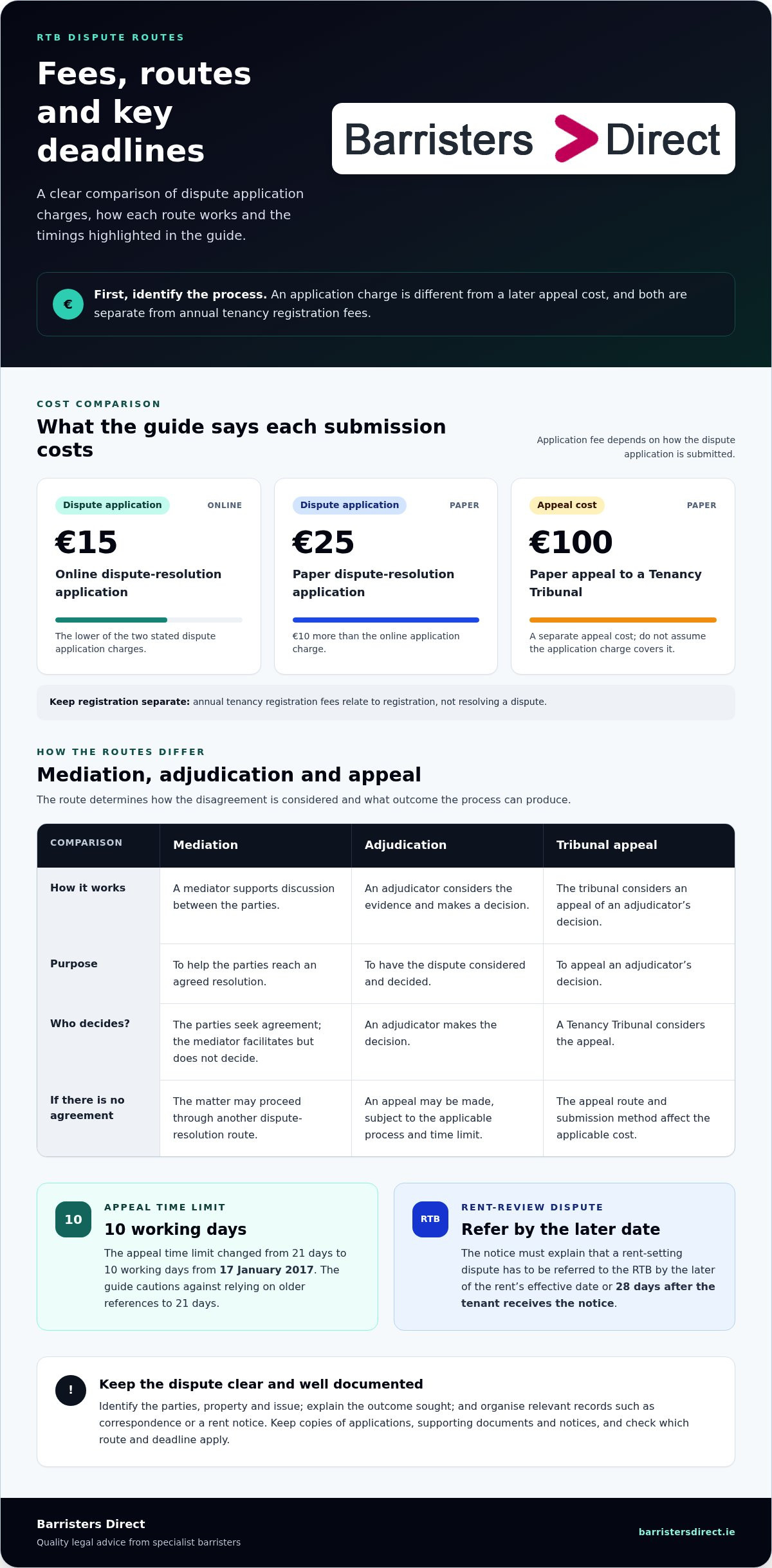
For a rent review, the notice must explain when a dispute about the new rent has to be referred to the RTB: by the later of the rent’s effective date or 28 days after the tenant receives the notice.
It’s easy to focus on the fee or proposed rent and overlook how the process, notice wording and deadlines fit together. Understanding the relevant RTB procedure can help landlords and tenants identify the issue and decide what to do next. Notice requirements also matter when challenging how a rent review was handled.
This guide explains which dispute routes have application fees, how appeal costs differ, and what a rent-review notice must say about referring a dispute. It also covers notice periods and other rules that may apply when ending a tenancy, helping you understand how to approach an RTB matter.
Key Takeaways
- Identify the dispute route before applying, as the fee depends on whether the matter proceeds through mediation, adjudication or appeal.
- For a rent review, pay close attention to the notice wording and the deadline for referring a rent-setting dispute.
- The notice period for ending a tenancy depends on how long it has lasted, so establish the tenancy duration before assessing a notice.
- Rent-arrears cases follow a two-stage notice procedure, while a dispute solely about an invalid termination notice has its own referral deadline.
- Since 14 September 2026, landlords must provide the RTB with a copy of a notice of termination within 7 days of serving it on the tenant.
RTB dispute types and application fees
In Ireland, the fee for a rental dispute depends on the resolution route and how the application is submitted. An online dispute-resolution application costs €15, while a paper application costs €25. These are distinct routes and charges, so identify the process before submitting anything.
The Residential Tenancies Board was established under the Residential Tenancies Act 2004. Its dispute-resolution process covers disagreements between landlords and tenants, including disputes about a rent increase. The appropriate route depends on the issue and the parties’ circumstances. Mediation supports an agreed outcome; adjudication involves an adjudicator considering the dispute and issuing a decision.
Choosing and submitting a dispute
Start by identifying the decision or outcome you need. A tenant disputing a rent increase, for example, should describe the rent-setting issue; a landlord seeking resolution of a tenancy disagreement should explain the relevant facts. Clearly identify the parties, property and issue in the application. Attach relevant records, such as correspondence or the rent notice, to help explain the dispute.
Applications can be made online or on paper. The fee is €15 for an online dispute-resolution application and €25 for a paper application. These charges should not be confused with annual tenancy registration fees, which relate to registration rather than resolving a dispute.
Before filing, organise the key dates and documents into a clear account. A rent-review notice, for instance, can show what increase was proposed and when it was communicated. Explain what you disagree with and what outcome you seek. Clear information defines the issue the parties need to resolve and gives the process a focused starting point.
Mediation, adjudication and appeals
Mediation gives landlords and tenants the opportunity to reach an agreed resolution with a mediator’s assistance. The mediator facilitates discussion but does not decide the dispute. If mediation ends without agreement, the matter may proceed through another dispute-resolution route.
Adjudication is a different process: an adjudicator considers the evidence and makes a decision. The appeal time limit changed from 21 days to 10 working days from 17 January 2017. Do not rely on older references to a 21-day appeal period.
A paper appeal to a Tenancy Tribunal costs €100. Check which appeal route applies to the decision and submission method, rather than assuming the application fee covers a later appeal. The appeal process also differs from mediation: mediation seeks agreement, while a tribunal considers an appeal of an adjudicator’s decision.
Whichever route you take, comply with the relevant legislation and keep copies of the application, supporting records and notices. A dated rent notice and a concise account of the disagreement can clarify what is being challenged. The fee is only one part of the process: choosing the correct route, explaining the issue and meeting the applicable deadline are also central to pursuing a resolution.
Registration is a separate obligation from resolving a disagreement. The Residential Tenancies Board (RTB) regulates Ireland’s rental sector and provides information and dispute-resolution services for tenants and landlords. The RTB is responsible for operating a national registration system for all private residential tenancies in Ireland. Tenancies in Ireland must be registered annually with the Residential Tenancies Board, and the registration details must be kept up to date. In Ireland, a tenancy must be registered with the RTB within 30 days of its commencement.
Registration timing and fees therefore belong to a different process from dispute applications. The basic annual RTB registration fee rates apply only when the completed application is received within one month of the tenancy start date. The late registration fee for an Irish tenancy registered with the RTB is €180. These registration requirements should not be confused with the charges for mediation, adjudication or submitting a dispute application: registration concerns tenancy records, while those charges concern resolving a disagreement. If both matters are relevant, keep them distinct when working out which process and fee applies. The RTB provides information and dispute-resolution services for tenants and landlords, as well as operating the national registration system, but registration does not replace the need to choose the appropriate route for a dispute.
What are the RTB rules for ending a tenancy and serving notice?
The required notice period depends on how long the tenancy has lasted. The schedule below gives the periods stated for the rules as of 4 December 2015. Assess a notice against the tenancy duration and the reason for ending it. A separate process applies when rent is unpaid, and an invalid notice can be challenged through a distinct dispute route. Keep the tenancy start date and notice together when working out which period may apply.
Notice periods by tenancy duration
For the duration bands in that schedule, the landlord’s notice period increases as the tenancy continues:
- Less than six months: 28 days.
- At least six months but less than one year: 35 days.
- At least one year but less than two years: 42 days.
- At least two years but less than three years: 56 days.
- At least three years but less than four years: 84 days.
- At least four years but less than five years: 112 days.
- At least five years but less than six years: 140 days.
- At least six years but less than seven years: 168 days.
- At least seven years but less than eight years: 196 days.
Use the band matching the tenancy’s duration, rather than choosing a period based only on the notice date. For example, the schedule gives 84 days where the tenancy has lasted at least three years but less than four. These periods relate to a landlord’s notice of termination. The reason for termination and the applicable rules also matter. A tenant assessing a notice can compare its dates with the relevant duration band and identify any difference.
Rent arrears and termination
Rent arrears follow a two-step procedure in the guidance described. First, the landlord serves a 14-day warning notice for failure to pay rent. The procedure then includes a 28-day notice of termination. These are separate stages, not alternative notice periods. A landlord dealing with arrears should distinguish the warning from the later termination notice and keep a clear record of each step.
For a tenant, dates and documents can help establish which stage has been reached. A rent record, warning notice and any later termination notice may all be relevant. If a payment is disputed, set out the amount and payment history clearly. Don’t confuse the arrears procedure with termination for another reason, which may have different requirements. Keeping notices in date order makes the sequence easier to follow.
Challenging a notice and sending a copy
A dispute solely concerning an invalid Notice of Termination must be referred to the RTB within 28 days of receiving the notice. The deadline runs from receipt, so record when the notice arrived and retain the document. This referral period concerns a dispute about validity; it is separate from the notice period the landlord must give to end a tenancy. A challenge about validity should be distinguished from disagreement with the reason given.
Since 14 September 2026, landlords in Ireland must provide the Board with a copy of a notice of termination within 7 days of serving it on the tenant. This is separate from serving the notice on the tenant. Landlords should record both the service date and the date the copy is sent. Keeping those dates distinct helps show when each action took place.
When reviewing a notice, identify its stated reason, the tenancy duration, the dates given and how it was served. Compare the termination date with the relevant period in the schedule, then consider whether the notice concerns arrears or another ground. A tenant challenging validity should distinguish that challenge from disagreement about the underlying reason. Clear records help explain the issue and its timeline.
If the notice or relevant dates are disputed, legal advice on a tenancy issue can help clarify the applicable rules and possible next steps.
For rent arrears, the guidance describes a landlord’s notice of termination as requiring 2 steps: a warning for failure to pay rent, followed by a notice of termination. Keep the warning and the later notice distinct when reviewing the sequence, and compare their dates with the payment record. Treating the warning and termination notice as a single stage would not reflect the two-step procedure described in the guidance.
Barristers Direct: Commercial Dispute Resolution
Barristers Direct connects people facing disputes with specialist barristers for legal advice and practical direction. Its Landlord & Tenant Legal Advice service can help you understand the issues, assess your position and consider next steps in a tenancy disagreement. If the dispute concerns a business relationship or commercial agreement, Commercial Dispute Resolution may be a better fit.
Through Barristers Direct, individuals and companies can instruct senior or junior counsel directly for an initial consultation. The service matches you with a barrister whose expertise fits the legal issue, so you can discuss the facts and receive focused advice on a way forward. Solicitors remain important to many legal matters; an initial consultation can help clarify how counsel may fit your circumstances.
Contact Barristers Direct to discuss your legal issue and the advice you need.
Take a clear next step
Before responding to a rent review or termination notice, gather the relevant correspondence, tenancy records and key dates. An organised file makes it easier to explain what happened, identify the decision you need to make and discuss your options with a legal professional. If you’re considering referring a dispute to the RTB, advice can help you frame the issue and understand the documents’ significance.
Barristers Direct connects clients with specialist barristers for legal advice. Its Commercial Dispute Resolution service may suit commercial disputes, while Wills and Probate Legal Advice and Employment Law Consultation address different legal needs. Choose advice that matches the issue, rather than relying on assumptions about how a process applies to your circumstances.
If you’d like to discuss your legal matter, contact Barristers Direct for advice. A focused conversation can help you approach the next decision with greater clarity and confidence.
Disclaimer
This article does not constitute legal advice. Barristers Direct does not provide legal advice. To obtain legal advice, you should contact a legal practitioner.


