

If a debtor in Ireland does not engage, a creditor can initiate legal proceedings to recover the debt. Debt recovery legal advice in Ireland can help you assess the claim, choose an appropriate next step and understand how a judgment may be enforced. Court action is one stage of the process, not the whole solution.
It is understandable to want a clear route to payment without taking unnecessary steps or overlooking a dispute. The process may begin with direct negotiation. If that does not resolve the matter, you can consider court proceedings, followed by enforcement if the court grants a judgment that remains unpaid. Debt recovery legal advice in Ireland can help you assess these options in context.
This guide explains how to prepare for recovery action, approach negotiations and take a claim through the Irish courts. It also covers considerations for enforcing an Irish judgment or seeking to enforce an international one, so you can understand how the stages fit together and where specialist legal advice can help you make informed decisions.
Key Takeaways
- Start by organising evidence of the debt and making a clear attempt to resolve the dispute directly.
- If negotiation fails, identify the court route that fits the claim and prepare for the steps involved in proceedings.
- A judgment is not the same as payment; consider which enforcement options suit the debtor’s circumstances and assets.
- For an international judgment, the country involved and the route for recognition and enforcement will shape your next steps.
- Specialist legal advice can help you assess the claim, understand court procedure and plan a practical recovery strategy.
Negotiation and dispute resolution
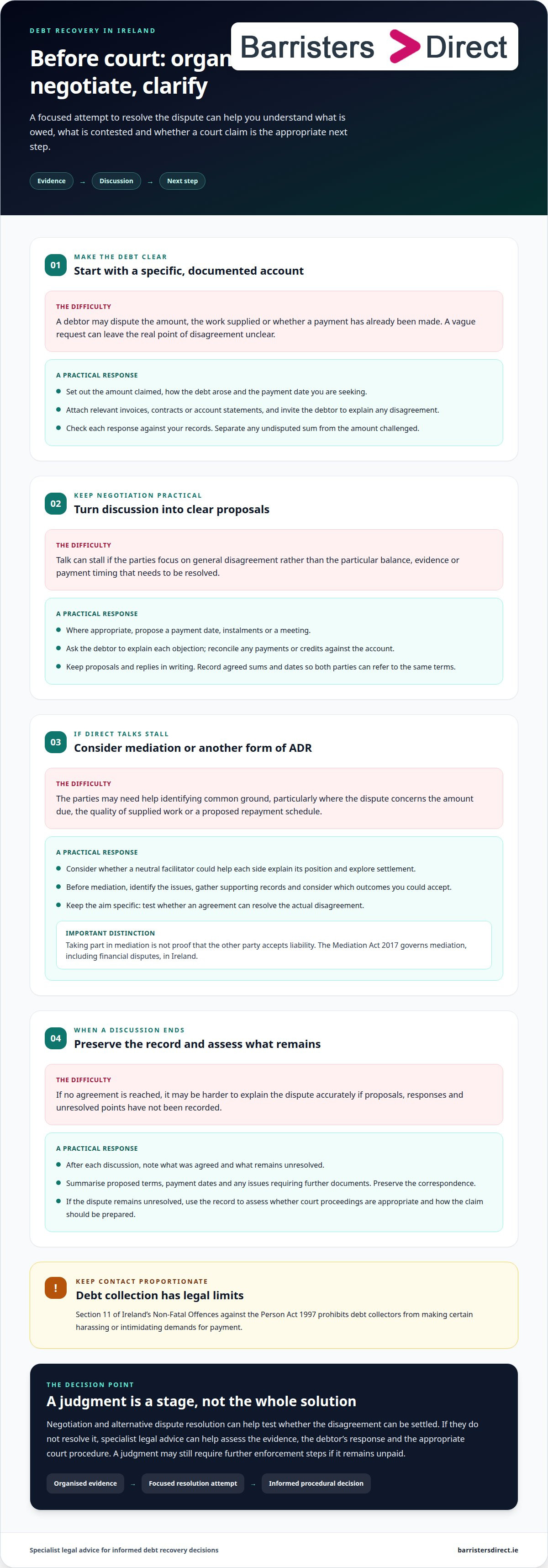
Start with a clear account of the debt and a focused attempt to resolve the dispute. If direct discussions fail, consider mediation or another form of alternative dispute resolution before deciding whether court proceedings are appropriate.
-
Begin with negotiation
Set out the amount claimed, how the debt arose and the payment date you are seeking. Attach relevant invoices, contracts or account statements, then invite the debtor to explain any disagreement. For example, a customer disputing an invoice may point to missing work or a payment already made. Check each response against your records and keep proposals and replies in writing.
Make the next step practical: propose a payment date, instalments or a meeting, where appropriate. Record any agreed terms clearly, including the sums and dates, so both parties can refer to the same proposal. Keep every contact factual and proportionate. Section 11 of Ireland's Non-Fatal Offences against the Person Act 1997 prohibits debt collectors from making certain harassing or intimidating demands for payment, according to the Irish Statute Book.
-
Consider alternative dispute resolution
If direct negotiation stalls, consider whether a neutral facilitator could help the parties identify common ground. Mediation gives each side a structured opportunity to explain its position and explore settlement. The Mediation Act 2017 governs mediation, including financial disputes, in Ireland, according to the Irish Statute Book. A financial dispute might concern the amount due, the quality of supplied work or a proposed repayment schedule.
Before agreeing to mediation, identify the issues to resolve and gather the records that support your position. Decide which outcomes you could accept, such as a revised payment timetable or correction of a disputed account. Do not treat attendance as proof that the other party accepts liability. The aim is to test whether an agreement can resolve the actual disagreement.
- Choose a process that fits the dispute. Alternative dispute resolution can include negotiation and mediation, giving the parties an opportunity to discuss settlement without immediately asking a court to determine the claim. Match the process to the practical issue: a disputed invoice may require evidence about work completed, while an acknowledged debt may call for focused discussion about payment timing.
Keep discussions centred on specific points. Separate any undisputed sum from the amount challenged, and ask the debtor to explain each objection. If a meeting is proposed, prepare a short chronology, relevant documents and a written list of possible terms. A clear record helps keep discussions focused on the debt.
- After each negotiation or mediation discussion, record what was agreed and what remains unresolved. Send a concise summary of proposed terms, including payment dates or any issues requiring further documents. If no agreement is reached, preserve the correspondence and note the outstanding points. This record can help you assess the next procedural step and explain the dispute accurately.
For focused guidance on the options for debt recovery in Ireland, review debt recovery legal advice. Specialist advice can help assess the evidence, the debtor’s response and whether negotiation remains useful. If the parties cannot resolve the dispute, the next step is to consider how a court claim should be prepared.
Court proceedings and judgments
If negotiation does not resolve the claim, prepare for court by organising the evidence, identifying the correct procedure and understanding what a judgment can achieve. A judgment records the court’s decision, but payment may still require further enforcement steps.
There is no single filing fee for every Irish debt claim. The charge depends on the court and the document used to begin proceedings, so identify the applicable fee before filing.
- Organise the claim evidence. Put the agreement, invoices, account records and payment history in date order. Check that the amount claimed matches the documents, and separate any interest or additional sum from the principal debt. If the debtor disputes part of an invoice, show which work or balance remains unpaid. A clear chronology helps explain how the claim arose and where the parties disagree.
- Identify the appropriate court procedure. The correct route depends on the amount claimed, the nature of the dispute and the procedure available for that claim. A straightforward unpaid invoice may require different preparation from a claim involving contested work or several contractual issues. Confirm the proper court and originating document before proceedings begin. Using the wrong route can create avoidable procedural problems.
- Prepare and issue the claim carefully. State the parties’ correct legal names, the amount sought and the basis for payment. Include the documents required by the chosen procedure, and arrange service in accordance with the applicable rules. Keep copies of filed papers and proof of service. For example, a company pursuing an overdue business invoice should ensure the named creditor matches the contract or account records.
- Respond to the debtor’s position. The next steps depend on whether the debtor admits the claim, contests it or does not respond. If the claim is defended, identify the specific issues and the evidence needed to address them. If the debtor accepts liability but disputes the balance, reconcile payments and credits against the account. Follow court directions and deadlines carefully, since procedural omissions can affect how the case progresses.
- Understand what the judgment decides. A judgment records the court’s determination and the amount payable under its terms. It does not itself transfer money to the creditor. If payment does not follow, the judgment creditor must consider an appropriate enforcement route, taking account of the debtor’s circumstances and available assets. Keep the order and payment records together to establish what remains due.
Where the claim involves disputed evidence or procedural choices, specialist legal guidance can help you assess the case and prepare for the next step.
Debt recovery litigation
Before starting a claim, assess whether it is within time and assemble evidence proving the debt. In Ireland, the applicable time limit depends on the claim’s legal basis and when the right to sue arose. Identify both before proceeding.
-
Check the claim time limits
Establish when the debt became due and identify the agreement or transaction behind it. The time limit for bringing a debt recovery claim depends on the type of claim and when its cause of action accrued. Check whether later events, such as a payment or written acknowledgment, affect the assessment. Do not assume that continued correspondence alone preserves the right to sue.
-
Gather evidence to prove the debt
Build a document trail showing the agreement, the work or goods supplied, the amount invoiced and what remains unpaid. Useful evidence may include a signed contract, purchase order, invoices, delivery records, account statements and messages about payment. For a disputed consultancy invoice, for example, the contract and dated records of completed work can help explain the sum claimed.
- Reconcile the balance. Compare each invoice against payments, credits and adjustments in the account. Prepare a calculation that shows the original amount, any sums received and the remaining balance. If the debtor challenges one item, separate that amount from any undisputed balance. Clear arithmetic helps the Irish court follow the claim and lets you identify the precise point in dispute.
- Connect each document to an issue. Arrange records chronologically and note what each one proves. A contract may establish the agreed payment terms, while an invoice records the amount claimed. Delivery notes or work records can show performance; emails may clarify a variation or complaint. Keep original electronic messages with their dates and participants visible, rather than relying only on extracted text.
- Prepare for a defence. Review the debtor’s likely explanation and compare it with the documents. If the debtor alleges defective work, identify the relevant contract terms, inspection records and communications about the alleged defect. If payment is claimed, compare bank entries with the account ledger. This helps distinguish a genuine factual dispute from a disagreement over the balance.
- Check the claim before filing. Confirm that the creditor named in the proceedings is entitled to recover under the agreement. Check the debtor’s legal name, the amount sought and the documents supporting each part of the claim. For a company account, compare the contract and invoices with the company records. A consistent claim makes it easier to explain who owes what and why.
Debt recovery litigation depends on a coherent account of the agreement, performance, payment history and outstanding balance. If a key document is missing or the debtor raises a substantial dispute, identify that issue before choosing the next procedural step.
Legal proceedings to recover debts
If a debtor does not engage, a creditor in Ireland can initiate legal proceedings to recover the debt. Before filing, confirm the amount claimed, the correct parties and the remedy sought.
Interest and legal costs may be recoverable where the contract or applicable legal basis allows them. They are not automatic, so identify the basis for each amount and distinguish it from the principal debt.
- Set out the claim precisely. Identify the creditor, debtor, agreement and outstanding sum. Separate the principal from any interest or costs, and explain how each figure was calculated. For example, a supplier claiming an unpaid invoice should identify the invoice and account for any part-payments or credits. A precise demand helps clarify what the debtor needs to address.
- Decide whether proceedings are necessary. Consider the debtor’s response, any dispute about liability and whether further contact could resolve the issue. If the debtor has not engaged, legal proceedings may provide a formal route to seek payment. If the debtor disputes only part of the balance, define that issue before commencing a claim rather than treating every amount as agreed.
- Check the basis for interest and costs. Review the contract for an interest term and confirm which sums it covers. Keep the calculation separate, linking the rate and period to the relevant contractual wording. For legal costs, distinguish expenses already incurred from costs sought through proceedings. The court’s treatment depends on the claim and applicable rules, so do not present every expense as automatically payable by the debtor.
- Choose a proportionate next step. Compare the claim’s value with the evidence, the debtor’s position and the practical route to payment. A small, undisputed invoice may call for a different strategy from a substantial claim involving disputed performance. Consider whether the debtor is an individual or a company, since that affects the information relevant to recovery and enforcement planning.
- Prepare for the debtor’s response. Once proceedings begin, organise the documents supporting the claim and identify the issues a defence may raise. If the debtor alleges defective work, connect the relevant contract terms with delivery records and communications. If the debtor admits the debt but proposes instalments, assess the proposal against the outstanding amount and record any agreed terms clearly.
- Plan beyond obtaining a court decision. A judgment determines the claim, but does not itself ensure payment. Before taking action, consider what is known about the debtor’s assets, business activity and ability to pay. If a company debtor is facing financial difficulty, recovery options may differ from those involving an individual with regular income. Match any enforcement strategy to the judgment and available information.
Which Irish court handles debt claims based on the amount owed?
Choose the Irish court route by checking whether its monetary jurisdiction covers the amount claimed. The correct route also depends on the claim type, whether the debt is disputed and the procedure available.
- Calculate the claim value. Add the unpaid principal and any other sums you can properly claim. Keep interest and costs separate from the underlying debt. For example, reconcile invoices and payments before deciding what amount the proceedings should seek. A clear calculation helps you compare the claim with the court’s monetary limits.
- Check the court’s jurisdiction. Compare the total claim with the monetary jurisdiction applying to the proposed court and procedure. Do not assume a small claims process applies simply because the debt is modest. Check whether the claim’s subject matter and parties fit that process. The amount is important, but it is not the only factor.
- Classify the debt accurately. Identify whether the claim concerns an unpaid invoice, a loan, rent or another contractual payment. A business invoice may involve different documents and issues from a consumer loan. Describe the agreement and remedy sought, then establish which procedural route can address that specific dispute in Ireland.
- Assess whether the claim is disputed. A straightforward claim for a fixed, unpaid sum may require a different approach from a case involving contested performance or several contractual issues. List the points the debtor accepts and challenges. For example, if the debtor accepts the invoice but disputes one item, separate it from the remaining balance.
- Check the parties and location. Confirm the creditor’s and debtor’s correct legal identities before selecting a route. A company claim should use the relevant company name, while an individual claim should identify the correct person. Consider where the defendant is based and whether the claim involves parties or events outside Ireland, as these features can affect procedure.
- Match the procedure to the evidence. Compare the available documents with what the proposed court process requires. A signed agreement, invoices and payment records may support an unpaid account; disputed work may require further records explaining performance. If the amount or basis of the claim changes, reassess the appropriate court before filing.
- Get advice before issuing proceedings. Court selection affects the documents filed and the steps that follow. If the amount sits near a jurisdictional boundary, or the debtor contests liability, obtain specialist advice on your court claim before choosing the procedure. A focused review can help align the claim value, evidence and route.
Select the court whose monetary jurisdiction covers the amount claimed, taking into account the claim type, whether it is disputed and the procedure available.
Barristers Direct: Commercial Dispute Resolution
Barristers Direct offers specialist barrister consultations for debt recovery and commercial disputes. If you need to assess a claim, decide whether to pursue proceedings or understand possible enforcement steps, a fixed-fee initial consultation can help clarify the legal issues and practical options.
You can arrange an initial consultation directly with senior or junior counsel, without first engaging a solicitor. The specialist barrister can consider your documents, the debtor’s response and the issues affecting recovery, then explain the legal position and possible next steps. If legal action is required, you must engage a solicitor.
If you would like advice on a debt recovery matter, visit Barristers Direct.
Choose your next step with clarity
Before taking further action, decide what a workable outcome means for your business. Consider whether your priority is recovering the full balance, agreeing a realistic payment arrangement or resolving a specific contractual disagreement. That objective can help shape your instructions and focus the advice on the decision you need to make.
Seeking debt recovery legal advice in Ireland can help you understand the strengths of your position and weigh the practical implications of each route. Barristers Direct offers Commercial Dispute Resolution, Wills and Probate Legal Advice, and Employment Law Consultation. If you need debt recovery legal advice in Ireland, specialist counsel can help clarify the legal issues and possible next steps.
For advice on your circumstances, contact Barristers Direct. A considered decision begins with a precise understanding of your options, so you can move forward with purpose.
Frequently Asked Questions
What is the Debt Collection Process in Ireland?
In Ireland, debt collection commonly begins with the creditor contacting the debtor to seek payment or understand the reason for non-payment. The creditor can then consider negotiation, mediation or legal proceedings, depending on the response and nature of the dispute. For example, a debtor who says an invoice was already paid may prompt an account review; silence may lead the creditor to assess a court claim.
What legal options are available for recovering a debt in Ireland?
A creditor can pursue direct discussions, consider mediation or initiate legal proceedings if the debtor does not engage. The best route depends on whether liability is accepted, what evidence supports the claim and whether the parties can agree payment terms. If the debt is disputed, identify the precise disagreement before deciding how to proceed. A commercial claim involving contested work may need a different approach from an acknowledged unpaid balance.
What is the Irish court process for recovering an unpaid debt?
The creditor starts by selecting a court procedure suited to the claim, then files the required documents and serves the debtor. The debtor may respond, dispute the claim or fail to engage; each response affects the next procedural steps. If the court decides the claim in the creditor’s favour, it may make a judgment for payment. If the debtor still does not pay, the creditor must consider enforcement separately.
How do you send a formal letter of demand for payment in Ireland?
Write directly to the debtor, identify the agreement or invoice, state the balance claimed and explain how to make payment. Set out disputed items separately, and give the debtor a clear way to respond with supporting information. Keep a copy of the letter and a record of when and how it was sent. Avoid overstating legal consequences or including amounts you cannot explain from the account records.
How can an Irish court judgment be enforced against a debtor?
If a debtor does not pay after judgment, the creditor can consider an enforcement route suited to the judgment and the information available about the debtor. The debtor’s assets, income, business structure and any security over property may affect the practical options. A receiver process may be relevant to enforcing a charge or judgment in appropriate circumstances. For a judgment involving another country, recognition and enforcement requirements also need consideration.
What should a creditor do if a debtor disputes the amount owed?
Ask the debtor to identify each disputed item and the reason for challenging it. Then compare the response with the contract, invoices, delivery or work records, payments and credits. For example, if the debtor accepts most of an invoice but challenges one charge, calculate each portion separately and continue discussions about the undisputed sum. Keep the exchange in writing so the issues and any proposed resolution remain clear.
What options are available if the debtor is insolvent or cannot pay?
If payment is not possible, debtors may have protections such as Debt Relief Notices or Debt Settlement Agreements. For a business debtor, options may include liquidation, examinership or SCARP; a receiver may also be used to enforce charges or judgments where appropriate.
When should you use a solicitor or debt collection agency in Ireland?
Seek a solicitor’s guidance when the claim involves disputed evidence, procedural choices, court proceedings or enforcement. Private debt collection agencies in Ireland are not subject to Central Bank authorisation and supervision.
Disclaimer
This article does not constitute legal advice. Barristers Direct does not provide legal advice. To obtain legal advice, you should contact a legal practitioner.


