

If you’re asking how to protect my inheritance, start by checking the paperwork rather than assuming a court dispute is needed. Uncertainty about a will, estate administration or your position as a beneficiary can make delays and unanswered questions feel significant.
First, establish what is known and keep a clear record. The right next step depends on the estate documents, what has happened so far and the concern you need addressed. A disagreement does not automatically mean court proceedings are necessary, but a specific concern may benefit from prompt, individual legal assessment.
This checklist explains what information to gather, how to record communications and which issues may need closer attention. It also outlines ways to seek specialist advice in Ireland, including a paid consultation with a relevant barrister arranged through Barristers Direct. Any advice and professional relationship are between you and the barrister. Use the checklist to clarify your position and consider practical next steps before deciding how to proceed.
Key Takeaways
- To understand how to protect my inheritance, organise the estate information and identify what is confirmed, unclear or unanswered.
- Check concerns against a specific document, event or missing explanation before drawing conclusions about how the estate is being handled.
- Keep a dated timeline of key events and retain written communications so you can explain the issue clearly if you seek advice.
- Consider whether solicitor support, further information or a specialist barrister consultation best fits the question you need answered.
- If entitlement, the will’s interpretation or estate administration is in doubt, a relevant barrister can assess your circumstances. Barristers Direct arranges the consultation, and the barrister provides any advice.
How to protect my inheritance: start with the facts and the estate paperwork
Inheritance concerns can feel personal, particularly when family relationships are involved or updates are unclear. Start by establishing what you know, which documents you have and what still needs explaining. If you’re working out how to protect my inheritance, begin with the records rather than accusations or assumptions. A delay or misunderstanding may need clarification, but it isn’t, by itself, proof of improper handling.
An inheritance-protection checklist is a way to organise facts before choosing a response. It can help you describe the issue accurately if you later discuss it with a solicitor or barrister. Entitlement and procedure depend on the circumstances and applicable Irish law, so general information should not be treated as a conclusion about your individual rights. The Succession Act 1965 is part of Ireland’s succession-law framework, but its effect on a particular estate needs to be assessed against the facts.
What information should I gather about an inheritance?
Start with the basic details: the deceased person’s name and date of death, and the name of any known personal representative or executor. Gather the will, any probate documents you have received, relevant correspondence and any estate statements or accounts available to you. Keep copies of documents sent to you, noting when they arrived and any related requests or replies.
Label each point as confirmed, assumed, unanswered or requested. A document you’ve received is confirmed information; a family member’s explanation that you haven’t checked against paperwork is unverified. This distinction keeps your account clear and helps a legal professional identify what needs checking.
How can I keep estate records clear and useful?
Create a dated timeline of important events, including when you received documents, asked a question or got a response. Keep the original paperwork safe and organise working copies in a folder, with files named by date and type. If the matter needs professional review, a concise timeline and orderly documents make it easier to explain the issue and focus on unanswered points.
- Keep communications in their original form where possible, and note the date and sender.
- Record the questions you’ve asked and whether a response is still outstanding.
- Don’t alter, remove or distribute estate property without appropriate guidance.
Keep your record factual and measured. If a document seems inconsistent or an explanation doesn’t answer your question, note exactly what you’ve noticed rather than drawing a conclusion. You can then consider what clarification or individual legal assessment may be appropriate.
Check the will, probate position and any warning signs before acting
Once you’ve gathered the available records, compare them carefully. A concern is easier to assess when it relates to a particular document, event or unanswered question, rather than a general feeling that something is wrong. For example, note if two estate statements appear to show different figures, or if a document you expected has not been provided. Record what you observed and what clarification you need, without assuming why the information differs.
Document the specific concern and the records that support it before deciding what to do. This keeps discussions factual and gives a solicitor or barrister clearer material to review. A delayed update may have an explanation, and delay alone doesn’t establish misconduct or determine whether you have a right to a particular remedy.
What should I check in a will and probate documents?
Read the documents available to you alongside your correspondence. Note differences in names, dates, figures or descriptions of assets, but don’t treat a discrepancy as proof that a will is invalid or that an estate has been mishandled. Record what you know about probate progress and list the information that remains outstanding. For general background on will-making in Ireland, see Citizens Information’s guide to making a valid will.
If your question concerns the will’s validity or meaning, your entitlement, or the effect of a particular document, seek an individual legal assessment. These issues depend on the precise wording, the estate’s circumstances and applicable Irish law. General guidance can help you frame a question, but it can’t determine your position.
When might an executor or will concern need attention?
Describe the issue in neutral terms. For example: “I requested an update on this date and haven’t received a response,” or “the figures in these two statements don’t match.” Keep the relevant documents and any replies together. This helps distinguish a communication gap or misunderstanding from a concern that may need further examination.
If the concern relates to an executor’s actions, note what happened, when it happened and which records support your concern. Don’t assume that a delay proves wrongdoing or that a particular legal response is available. A specialist can assess the facts and explain what options may be appropriate. If you’re considering how to protect my inheritance and need an individual view on a specific concern, Barristers Direct can arrange a consultation with a relevant barrister; any advice is provided by that barrister.
Compare inheritance help options before choosing your next step
The right support depends on the question you need answered, the work involved and whether formal proceedings may be needed. If you’re considering how to protect my inheritance, first organise the relevant documents and list your questions. That may help you identify missing information. If the issue concerns your legal position, a solicitor or barrister can assess it in light of the facts and Irish law.
A solicitor often supports clients across a broader range of legal and transactional matters, including estate-related work. A barrister provides specialist legal advice and courtroom advocacy. These roles can complement each other. Neither professional is automatically the faster, cheaper or better choice for every beneficiary; the right fit depends on what you need. For an overview of the distinction, see the difference between solicitors and barristers.
Should I speak to a solicitor or a barrister about inheritance?
If you need support with broader client-facing work or estate administration, a solicitor may be well placed to advise and assist. If you have a focused legal question, such as how a will’s wording may apply to your circumstances, a barrister’s specialist assessment may help clarify the issue. If you’re considering challenging a will, seek individual advice promptly, as the applicable legal rules and any time limits depend on the claim and facts.
Probate is part of the process for administering an estate. The Courts Service of Ireland provides information about probate and related procedures. This can help you understand the procedural context, but it won’t determine your entitlement or resolve a dispute about a particular will.
What does a direct barrister consultation involve?
Barristers Direct arranges a paid consultation with a barrister whose expertise matches the inheritance issue. You can discuss your documents and questions with that specialist and hear their assessment. Any advice and professional relationship are directly between you and the barrister. Barristers Direct arranges access and does not itself provide legal advice or representation.
If formal proceedings are being considered, a solicitor may be needed to advise on and manage the legal work involved. A barrister consultation doesn’t replace that role or provide litigation representation. Consider what you need now: help managing the broader matter, a specialist opinion on a defined legal point, or both. If a focused inheritance issue needs specialist consideration, you can explore a relevant consultation through Barristers Direct.
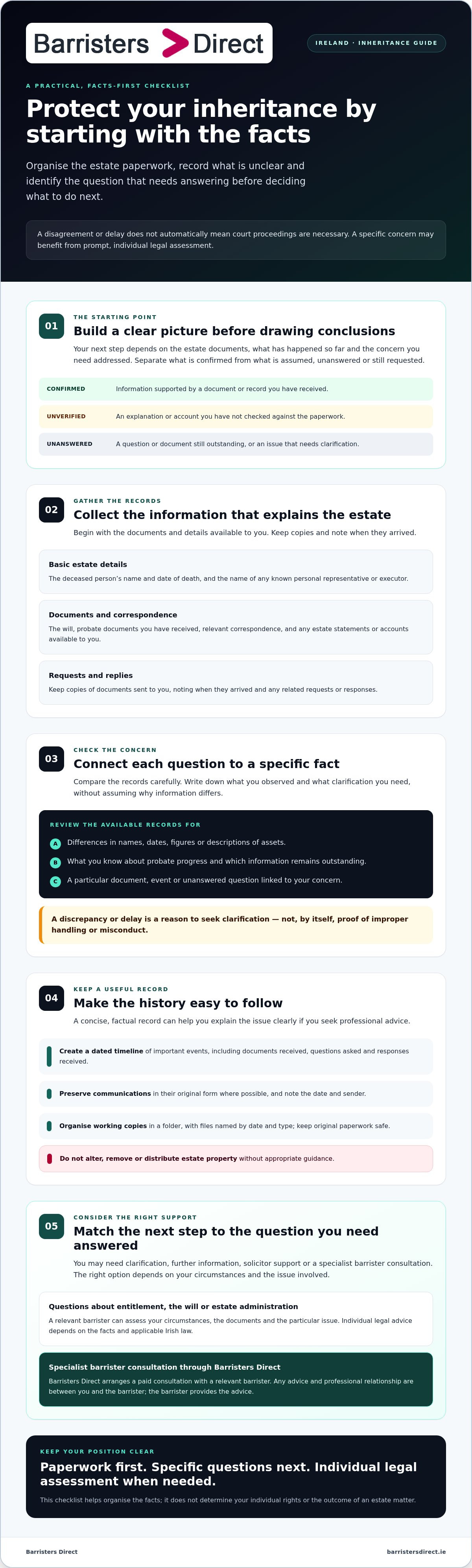
Use this practical checklist to protect your position as a beneficiary
A clear record helps you explain your concern, ask focused questions and decide whether professional advice is needed. Use this checklist to organise your next steps without assuming that every disagreement requires a will challenge or court action.
- 1. Gather the key records. Collect the will and any probate documents available to you, along with estate statements, correspondence and other relevant documents. Keep copies of what you send and receive.
- 2. Build a concise timeline. Note important dates, such as when you received a document, made a request or got a reply. Keep the entries factual and include who was involved.
- 3. List what remains unclear. Separate confirmed facts from assumptions. Turn each concern into a specific question, such as what explains a difference between two estate documents.
- 4. Request clarification calmly. Use dated written communication, explain what you’re asking about and keep the response. Avoid accusations or a formal-sounding legal notice unless a qualified professional advises you to take that step.
- 5. Check for possible deadlines or risks. If a document mentions a deadline, or you’re concerned that delay may affect your position, seek prompt individual guidance. Ask a qualified professional to check what the timing means for your circumstances.
- 6. Decide on a response after reviewing the facts. A disagreement doesn’t automatically mean a will should be challenged. Consider whether clarification, professional advice, negotiation or formal action may be appropriate to the issue.
What should I prepare before asking for professional help?
Prepare the will and probate documents you have, relevant correspondence and your timeline. Write down the outcome you’re seeking, the questions you need answered and any dates mentioned in the paperwork. A legal professional can assess the significance of those dates and the available information in light of your circumstances.
How do I raise a concern without escalating conflict unnecessarily?
Keep your message measured and tied to specific facts. Ask clear questions, avoid public accusations and don’t take unilateral steps involving estate assets. If the issue remains unresolved, get a professional view before deciding whether a further discussion, negotiation or formal action is suitable.
If a focused inheritance concern needs an individual legal assessment, explore a specialist barrister consultation. Barristers Direct arranges access to a relevant barrister; any advice is provided by that barrister.
Get specialist inheritance guidance when the facts need a legal assessment
An individual legal assessment may help if you’re unsure how a will should be interpreted, whether you’re entitled to a share, or whether a concern about estate administration has a legal basis. These questions turn on the documents, the sequence of events and applicable Irish law. Organised records can help you explain the issue clearly, but they can’t determine your rights on their own.
If you’re asking how to protect my inheritance in a situation that needs specialist consideration, Barristers Direct arranges a paid consultation with a barrister whose expertise matches the issue. Consultations can take place online or by telephone. The barrister provides any advice directly to you. A consultation is an opportunity to discuss your circumstances, not a guarantee of a particular conclusion or outcome.
What can I expect from an inheritance consultation?
Bring the documents available to you, your timeline and a short list of questions. You might want to clarify a point in the will, understand what further information could help assess your position, or discuss a concern about how the estate is being administered. A clear account of what happened and what remains uncertain gives the barrister useful context for considering your issue.
The barrister’s assessment will depend on your individual facts and the applicable law. Barristers Direct arranges access to the barrister; it doesn’t advise you, represent you or control the barrister’s conclusions. If you need clarification about the advice, raise it directly with the barrister.
What should I do after receiving specialist advice?
Review the advice alongside your records and note any points you want to clarify. You can discuss those questions directly with the barrister. If you decide to seek further work, the scope and any fees are agreed directly between you and the barrister. A solicitor may also be needed if formal proceedings or other solicitor-led work is required. The appropriate next step depends on the advice and your circumstances.
Specialist guidance can help you make a more informed decision, whether that means seeking clarification, considering another practical response or exploring formal options. To discuss a specific inheritance concern with a relevant barrister, arrange access to a specialist barrister.
Take your next step with a clearer picture
Knowing how to protect my inheritance starts with a careful record of the estate, the documents available and the questions that remain unanswered. Check the will and probate information against the facts you can confirm, and avoid treating a delay or disagreement as proof of wrongdoing. If entitlement, interpretation or administration remains uncertain, an individual legal assessment can help you understand the issue before deciding what to do next.
Barristers Direct arranges paid consultations with barristers matched to the relevant area of law. You can discuss your concern with the barrister online or by telephone. The service is available nationally across Ireland. Any advice is provided by the barrister, and a consultation can help clarify your position without guaranteeing a particular outcome or assuming court action is necessary.
If you’re ready to discuss a specific inheritance concern, arrange a consultation with a relevant barrister. A clear, informed next step can help you move forward with greater confidence.
Frequently Asked Questions
How can I protect my inheritance in Ireland?
Start by checking the estate information and keeping an organised record of documents, communications and important dates. Note what is confirmed and what remains unclear, then ask focused questions before making assumptions about how the estate is being handled. If you’re unsure about your entitlement, the will’s interpretation or estate administration, seek individual legal advice. The right next step depends on your circumstances and the applicable Irish law.
Can an executor keep information about an estate from a beneficiary?
Whether particular information must be provided depends on the estate, your position and the circumstances. Don’t assume that a missing update automatically means information is being improperly withheld. Record what you’ve requested, when you asked and any response, then seek clarification in measured written terms. If important questions remain unanswered, a solicitor or barrister can assess your position and advise what steps, if any, may be appropriate.
What should I do if I think an executor is mishandling an inheritance?
First, identify the specific action or information that concerns you and keep any supporting documents. For example, note a discrepancy between estate statements or a request that has not received a response. Avoid public accusations or taking unilateral action involving estate property. Ask for clarification calmly, and if the concern remains, seek individual legal advice. Delay or confusion alone doesn’t establish misconduct or determine what remedy may be available.
Can I challenge a will if I believe my inheritance is unfair?
Possibly, but feeling that a will is unfair doesn’t by itself establish a legal basis to challenge it. The relevant grounds, evidence and any applicable time limits depend on the facts and Irish law. Keep the will and related documents, note what concerns you, and obtain prompt legal advice if you’re considering a challenge. A solicitor or specialist barrister can assess your circumstances and explain the options without assuming court proceedings are necessary.
How do I know whether I need a solicitor or a barrister?
Consider the work you need. A solicitor commonly provides broad, client-facing support and may handle transactional matters and estate administration. A barrister provides specialist legal advice and courtroom advocacy. The roles can complement one another, and the appropriate professional depends on your issue and whether further work or proceedings may be required. If you’re uncertain, explain your concern and ask a qualified legal professional which support best fits your circumstances.
Can I speak directly to a barrister about an inheritance dispute?
Yes. Barristers Direct arranges a paid consultation with a barrister matched to the relevant area of law, including wills and probate matters. A consultation can take place online or by telephone. You can discuss your specific inheritance concern directly with the barrister. Any advice and professional relationship are between you and that barrister; Barristers Direct arranges access but doesn’t itself provide legal advice or representation.
What should I bring to an inheritance consultation?
Bring the documents relevant to your concern, such as the will, probate documents and estate correspondence available to you. A concise timeline can help explain what happened and when. Write down the questions you need answered, what you understand so far and any information that remains outstanding. If a document mentions a deadline, flag it and ask the barrister to assess its significance in light of your circumstances.
Can a barrister guarantee that I will receive my inheritance?
No. A barrister can assess the information you provide and give advice based on the individual facts and applicable law, but no particular outcome can be guaranteed. A consultation may help clarify your legal position and possible next steps; it can’t promise that you’ll receive an inheritance or that a dispute will resolve in a particular way. Any further work is discussed directly between you and the barrister.
Disclaimer
This article does not constitute legal advice. Barristers Direct does not provide legal advice. To obtain legal advice, you should contact a legal practitioner.


